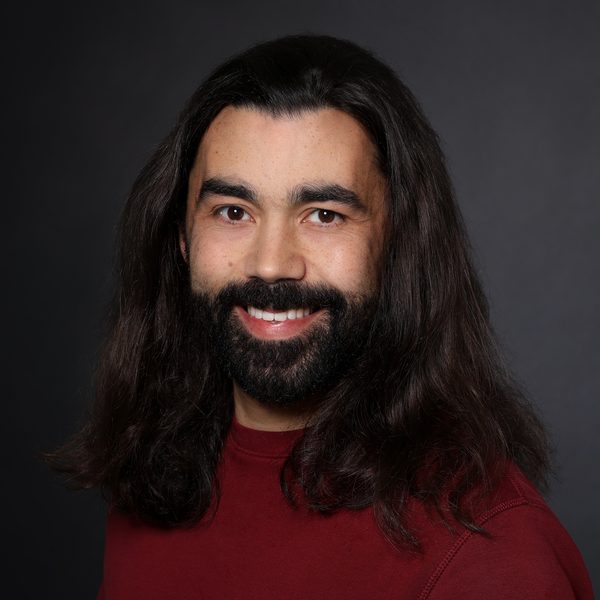
I work on planning and program execution for autonomous robots. My focus is on first-order temporal specifications and situation-calculus (Golog) programs, which quantify over objects and therefore generalize across instances. I also work on which correctness guarantees still hold when components of a system are learned rather than specified. I build and deploy these systems on physical robots in industrial settings.
Before Oxford I was a postdoctoral researcher at RWTH Aachen University, where I received my PhD in 2023 under Gerhard Lakemeyer. My work at Oxford is part of the euroFMX project.
News
- I presented our paper Decidable Reasoning about Time in Finite-Domain Situation Calculus Theories at TIME 2026 (paper, slides).
- I joined the University of Oxford as a postdoctoral research associate, working with Giuseppe De Giacomo.
- I presented our paper Abstraction via Skolemization for Generalized Planning (and Beyond) at the KR Workshop on Theory and Methods for Abstraction (THEMA).
- Daniel Swoboda presented WorkBenchMark, our LEGO assembly benchmark for the Smart Manufacturing League, at RoboCup 2026 (project page).
- I presented three of our papers at the ICAPS Workshop on Generalization in Planning (GenPlan).
Selected publications
- Satisficing and Optimal Generalised Planning via Goal Regression. AAAI 2026.
- LTLf Synthesis on First-Order Agent Programs in Nondeterministic Environments. AAAI 2025.
- Learning Generalized Policies for Fully Observable Non-Deterministic Planning Domains. IJCAI 2024.
- Abstracting Noisy Robot Programs. AAMAS 2023.
- TACoS: A Tool for MTL Controller Synthesis. SEFM 2021.
- Winning the RoboCup Logistics League with Fast Navigation, Precise Manipulation, and Robust Goal Reasoning. RoboCup 2019.